We have all experienced the frustration of a bathroom door that refuses to close properly during a humid summer. This common annoyance happens because traditional timber acts like a dense sponge, soaking up moisture until the frame swells and creates friction against the jamb. While wood remains the classic choice for luxury aesthetics, its sensitivity to climate changes often leads homeowners to ask if there is a way to get that timeless look without the high-maintenance headaches.
Enter Wood Plastic Composite (WPC), a modern biological hybrid designed to solve these specific durability issues. Think of these composite doors as a sophisticated recipe where recycled plastics and wood fibers are baked together, creating a material that offers the rigidity of timber with the water resistance of synthetic shielding. Unlike solid wood, this engineered blend does not warp or rot when exposed to steam, making it a formidable contender for modern renovations.
Deciding which one is better, WPC or wood doors? ultimately comes down to where you plan to install them and your tolerance for upkeep. While natural timber provides an undeniable sense of prestige for a front entrance, WPC offers a “set it and forget it” solution for damp environments like bathrooms.
The Secret Sauce: How WPC Mixes Sawdust and Plastic for Maximum Strength
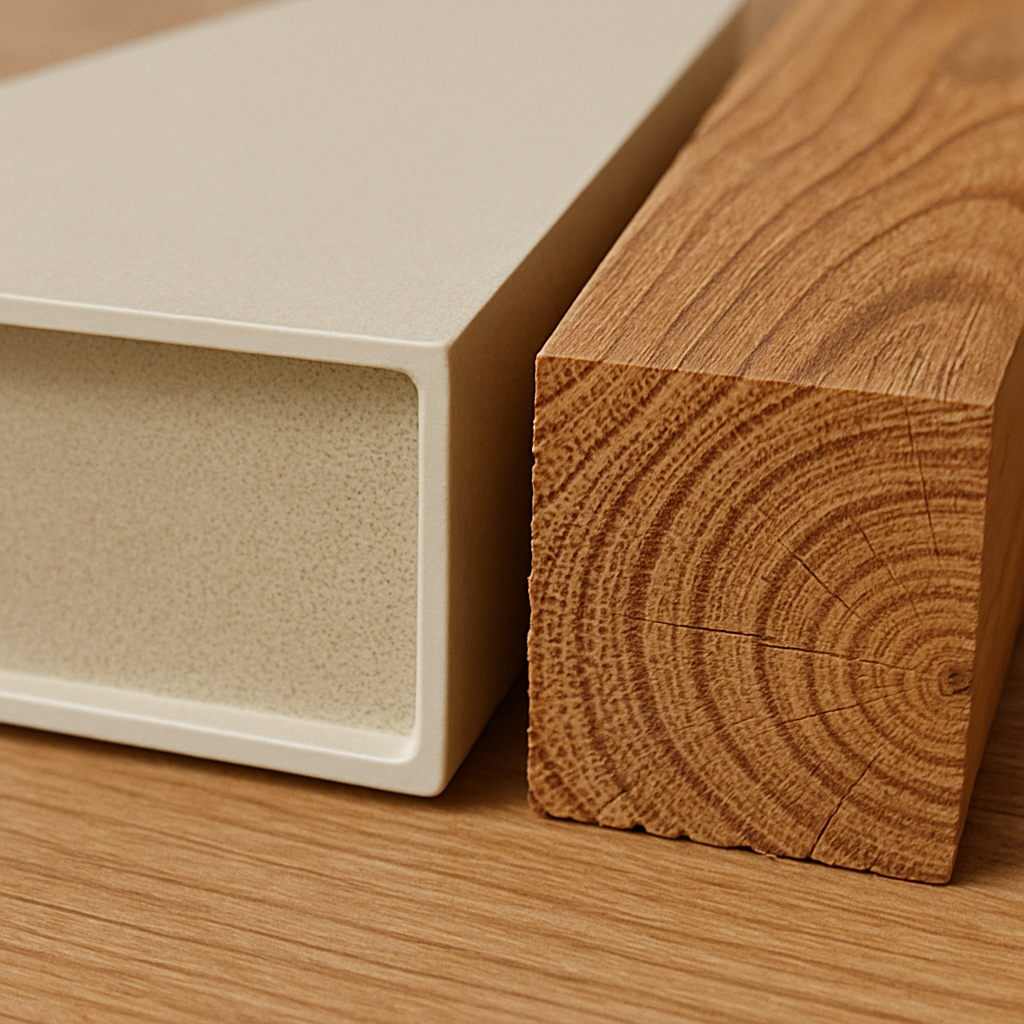
WPC requires a bit of kitchen chemistry logic. Think of Wood Plastic Composite (WPC) as a biological hybrid designed to capture the best traits of timber while eliminating its inconsistencies. Manufacturers take reclaimed wood fibers—essentially sawdust that would otherwise be discarded—and bond them with recyclable thermoplastics at high temperatures. It is effectively a recipe that mixes organic texture with synthetic durability, creating a material that is tougher than the sum of its parts.
Instead of being sawed from a log, this heated mixture is pushed through a shaped mold in a process called extrusion. This creates a board that is incredibly dense and perfectly uniform. You won’t find knots, sap pockets, or erratic grain patterns that often act as weak spots in natural lumber. By using waste byproducts, this manufacturing method lowers the environmental impact of wood plastic composite, making it a smart eco-friendly alternative to traditional wood doors without sacrificing that heavy, premium feel.
- WPC Construction: Reclaimed Wood Fibers + Recycled Polymers (Uniform density)
- Solid Wood Construction: Organic Cellulose + Natural Lignin (Variable grain structure)
While some cheaper composites are built with hollow cores to cut costs, high-quality WPC offers a solid interior that mimics the substantial weight of hardwood. This density provides the excellent thermal stability of engineered door materials, meaning the door keeps its structural integrity regardless of the season. Because the plastic encapsulates the wood fibers, the material creates a unique defense against the most common bathroom door disaster.
Next: Sponge vs. Shield: Why WPC Stops Warping in High-Humidity Areas
Sponge vs. Shield: Why WPC Stops Warping in High-Humidity Areas
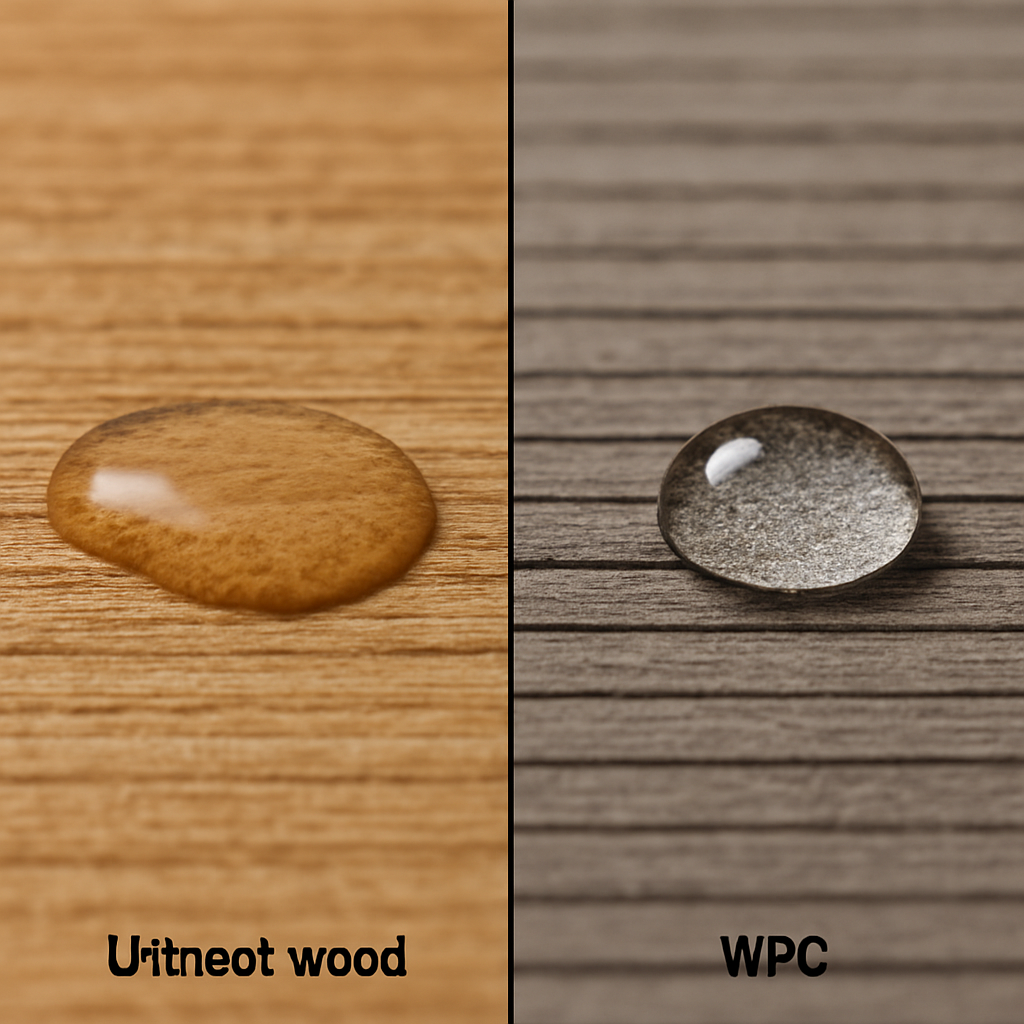
If you live in a region with heavy rainfall or simply enjoy hot showers, you’ve likely battled a door that refuses to close properly during certain months. This annoyance, often called the “sticky door” syndrome, happens because natural timber behaves biologically like a sponge. Wood contains microscopic vessels designed to transport sap; once the tree is cut, those same vessels actively suck moisture out of the air, causing the fibers to expand and the door frame to distort against the jamb.
WPC changes this dynamic entirely by acting as a shield rather than a sponge. During the manufacturing process, the plastic polymers completely coat the individual wood fibers, effectively sealing off those thirsty vessels. Because there is no path for water to enter the core, the waterproof properties of composite doors remain consistent regardless of the environment. Even if you splash water directly on the surface while cleaning or the room fills with steam, the material stays dimensionally stable and retains its original shape.
This inherent hydrophobicity—a fancy way of saying it repels water—makes these composites the default choice for wet areas. When contractors discuss how to install WPC bathroom doors, the conversation rarely involves acclimatizing the door to the humidity level first, which is a mandatory step for solid wood to minimize future movement. You can install them with the confidence that the bottom edge won’t rot from floor moisture and the frame won’t bow out of alignment within a year.
Ignoring moisture issues leads to more than just a tight fit; constant cycles of swelling and warping in humid climates eventually cause paint to crack and joinery to separate. By eliminating the expansion cycle, WPC protects your investment from structural degradation over the long haul. However, moisture isn’t the only natural force trying to destroy your entryway; a dry, rigid door is often the perfect snack for a different kind of pest waiting in the walls.
Next: Defeating the Invisible Eaters: Why Termites Ignore WPC but Love Your Teak
Defeating the Invisible Eaters: Why Termites Ignore WPC but Love Your Teak
Investing in premium timber like teak adds character to a home, but it also invites a persistent threat. While teak contains natural oils that deter pests, the high maintenance requirements for teak wood doors often involve regular chemical treatments to guarantee safety. Without this constant vigilance, natural cellulose becomes an all-you-can-eat buffet for colonies hidden deep within your walls.
Composite materials solve this biological vulnerability through a smart “hybrid” structure. By bonding wood fibers with recycled plastics, manufacturers create a material that is effectively inedible. In the comparison of WPC vs solid wood door durability, the composite wins because the plastic encapsulates the wood content, creating a barrier that termites simply cannot digest or penetrate. The pests may scout the frame, but they won’t eat it.
By prioritizing termite resistant interior door options, you eliminate the need to constantly check your entryways for damage. With WPC, you gain total peace of mind, freeing yourself from watching for the classic warning signs of compromised timber:
- Hollow sounds when tapping the door frame.
- Mud tubes climbing up the foundation or trim.
- Discarded insect wings accumulating near the threshold.
With the structural integrity guaranteed, the remaining question is usually aesthetic: does this durability come at the cost of beauty?
Next: Texture and Touch: Can WPC Match the Authentic Feel of a Solid Teak Door?
Texture and Touch: Can WPC Match the Authentic Feel of a Solid Teak Door?
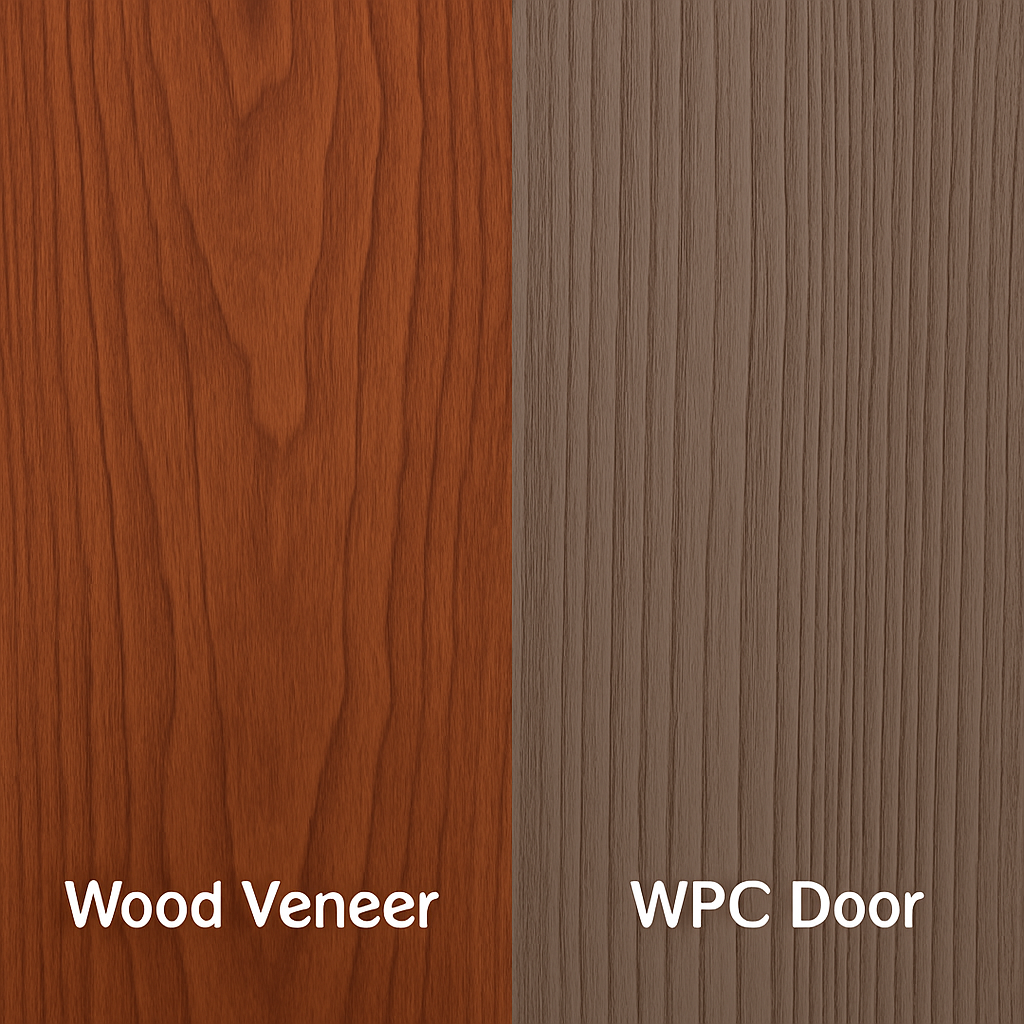
Running your hand across a solid teak plank offers a distinct warmth that historically set the standard for luxury. While early composite attempts felt noticeably artificial, modern manufacturing has closed this sensory gap significantly. Today’s premium composite doors often feature a legitimate wood veneer—a thin slice of actual timber bonded to the surface—providing the exact grain patterns and texture you expect from natural lumber. This allows you to achieve specific wooden door styles, from rustic oak to sleek mahogany, without the core instability and warping risks of a full timber slab.
For households with active pets or toddlers, the aesthetic differences between veneer and WPC are often less about the initial look and more about longevity. A traditional varnished surface is prone to deep gouges from claws or toys, requiring sanding and refinishing to repair. High-quality WPC skins are engineered to be impact-resistant, handling the daily abuse of a busy hallway better than softwoods like pine. While pure wood develops a “patina” of wear that some find charming, a composite surface maintains its factory-fresh look for years, resisting the scuffing that usually ages a home’s interior.
Beyond surface grain, the feeling of quality comes from weight and silence. There is a common misconception that “plastic” implies a lightweight, hollow shell, but the soundproofing capabilities of heavy duty WPC often rival solid timber due to the density of the compressed fiber core. When you swing a solid composite door shut, it delivers a satisfying, heavy “thud” rather than a hollow rattle, effectively blocking noise from bathrooms or home offices. This density mimics the substantial feel of an old-world entryway while acting as a modern barrier against household commotion.
Next: The Hidden Costs of Maintenance: Why a Cheaper Wood Door Might Cost More Over 10 Years
The Hidden Costs of Maintenance: Why a Cheaper Wood Door Might Cost More Over 10 Years
Buying a door often feels like a one-time transaction, but choosing natural timber is actually the beginning of a long-term financial commitment. While a standard pine or engineered wood door might have a tempting lower sticker price than a high-end composite, that initial savings evaporates quickly when you calculate the Total Cost of Ownership (TCO). Wood is organic; it reacts to its environment by expanding, contracting, and degrading, which means you are signing up for a lifetime of defense against the elements.
Look at what the next decade involves for your weekend schedule and your wallet:
- Traditional Wood: Requires sanding down scuffs, filling cracks, and applying fresh varnish or paint every 2–3 years to prevent moisture rot.
- WPC (Wood Plastic Composite): Requires a simple wipe-down with soapy water to remove dust; no sanding, sealing, or painting is ever needed.
Beyond the savings on labor and paint, there is an often-overlooked safety value that protects your investment: fire resistance. Wood is naturally combustible fuel, whereas the polymer blend in composite materials gives them a high fire retardant rating for composite doors. Many WPC doors are “self-extinguishing,” meaning they don’t feed a flame, providing critical extra minutes during an emergency and potentially lowering insurance risk profiles.
Ultimately, the lifespan of solid timber vs composite comes down to how much work you are willing to do. If you view a door as a “set it and forget it” part of your home structure rather than a piece of furniture that needs constant polishing, the composite option pays for itself within the first few years of ownership.
Next: The Final Decision: A Room-by-Room Guide to Choosing Between WPC and Wood
The Final Decision: A Room-by-Room Guide to Choosing Between WPC and Wood
You no longer need to pick a single winner between modern durability and organic beauty. The smartest renovations often mix materials, playing to the strengths of each. Instead of asking broadly which one is better, WPC or wood doors?, you can now make strategic decisions based on the specific threats—like humidity or termites—present in each room.
Before heading to the showroom, map out your project using this simple strategy:
- Bathrooms: Choose WPC to completely eliminate moisture swelling.
- Kitchens: WPC stands up best to splashes and frequent cleaning.
- Bedrooms: Use Wood for acoustic warmth or WPC for budget savings.
- Main Entry: Stick with Solid Wood or Veneer for unbeatable curb appeal.
While WPC offers a “set it and forget it” solution for wet areas, remember that traditional timber offers the unique advantage of refinishing possibilities for natural wood surfaces later in life. By placing the right material in the right environment, you ensure your investment holds up against the elements without sacrificing the welcoming charm of your home.