
Choosing the right door size is crucial for any home. It affects both functionality and aesthetics.
Understanding residential door sizes can be overwhelming. There are many options to consider.
Standard door sizes vary for interior and exterior applications. Each serves a unique purpose.
Interior doors are typically smaller. They offer privacy and style within the home.
Exterior doors are larger. They provide security and accessibility.
This guide will help you navigate the world of residential door sizes. You’ll learn to choose the perfect fit for your needs.
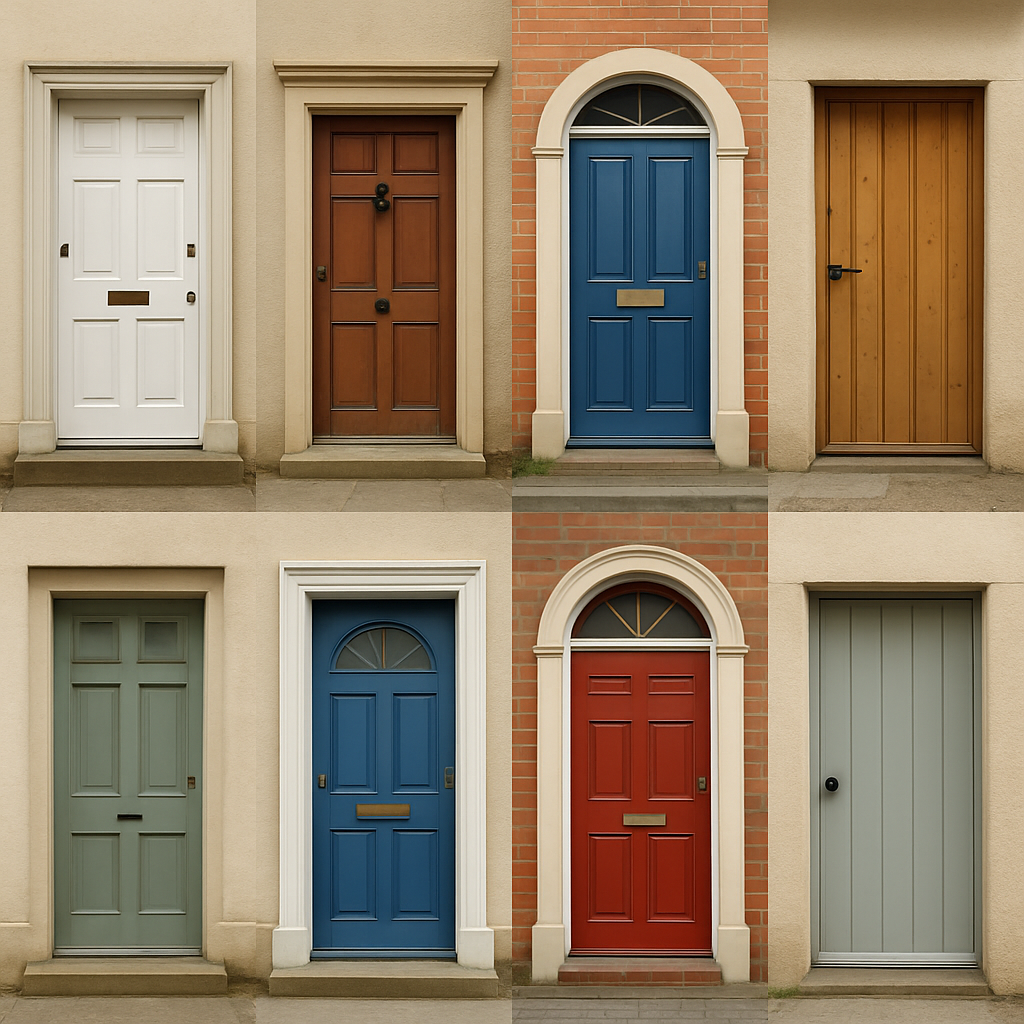
Understanding Standard Door Sizes
Standard door sizes are fundamental to home construction. They ensure consistency and efficiency.
In the U.S., common door widths range from 24 to 36 inches. Heights typically measure around 80 inches.
These dimensions cater to most residential needs. They are often chosen for their ease of installation.
Standard sizes help in maintaining uniformity. This is crucial during the home building process.
Here are the common width options for standard doors:
- 24 inches
- 28 inches
- 30 inches
- 32 inches
- 36 inches
These sizes play a crucial role in interior and exterior uses. Exterior doors tend to be wider. This is to allow for easy access and movement of large items.
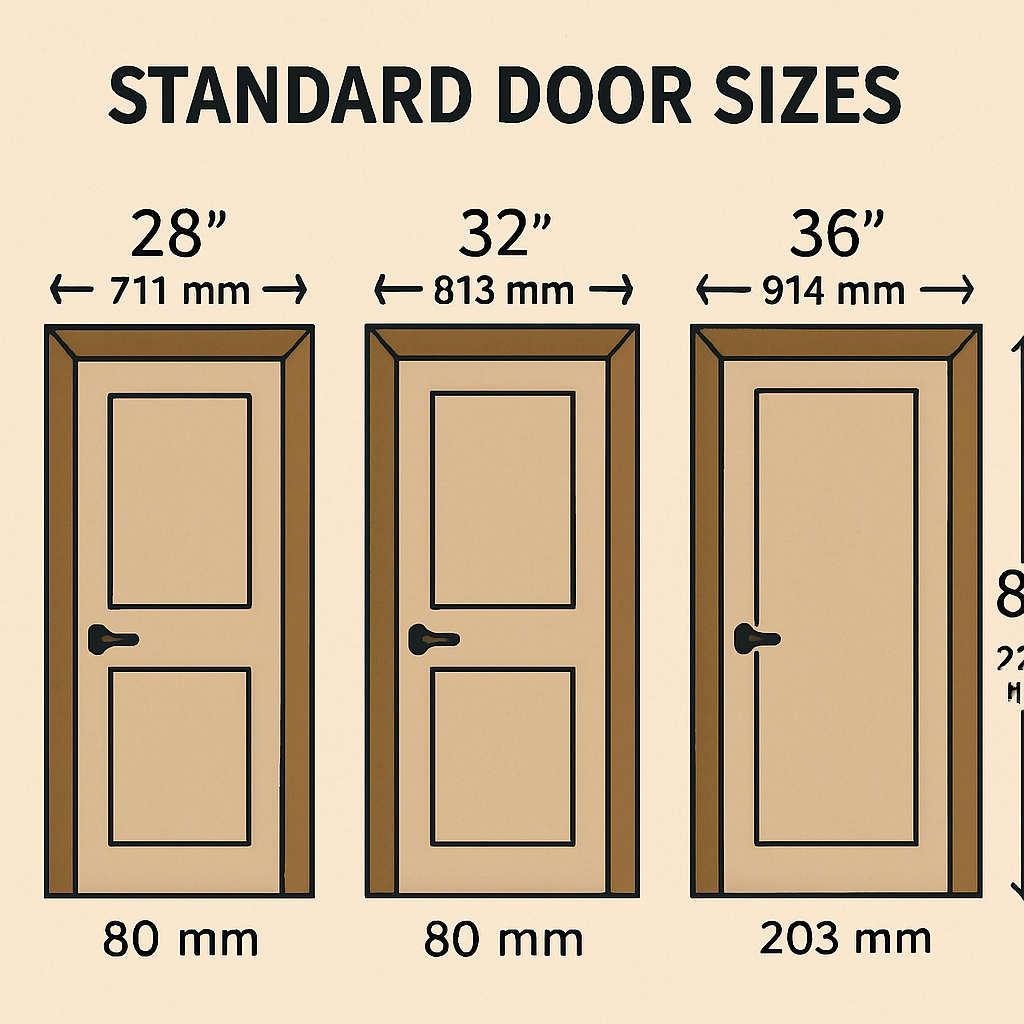
When planning your door installation, consider these typical dimensions. They provide a good starting point for any project. They also streamline the selection process, ensuring compatibility with existing frames and structures.
Interior Door Sizes Explained
Interior doors differ from exterior ones in both function and size. Their dimensions are generally smaller to fit within interior spaces. Their purpose often focuses on privacy, room separation, and aesthetic appeal.
Typically, interior door widths range from 28 to 32 inches, although smaller sizes are sometimes used in compact areas. The standard height remains around 80 inches, similar to exterior doors. The thickness of these doors often measures about 1 3/8 inches, which is lighter and slimmer compared to exterior doors.
Choosing the right interior door size helps in optimizing room functionality and flow. For instance, a narrow hallway may require a narrower door to ensure safe passage.
Here are the most common widths for interior doors:
- 24 inches
- 28 inches
- 30 inches
- 32 inches
Interior doors come in various styles, from traditional panels to sleek flush designs. Knowing your space’s constraints aids in selecting the best size and style. While small closets may require bifold or sliding doors, a master bedroom might benefit from a grander, wider door.

Understanding the variations in interior door sizes will facilitate better design choices, ensuring each door complements your home’s aesthetic while providing necessary functionality.
Exterior Door Sizes and Entryways
Exterior doors serve as the main point of entry and exit for your home. They not only provide security but also contribute significantly to curb appeal. The size of an exterior door should accommodate these functional and aesthetic needs.
Most exterior doors in residential settings have a standard width of 36 inches. This size is popular because it allows easy movement of large items like furniture. The standard height for an exterior door is generally about 80 inches. However, taller doors, sometimes 96 inches, are also used to create a more dramatic entrance.
Beyond size, exterior doors often come with additional features like sidelights or transoms that enhance their appeal and allow more light. It’s crucial to choose a door size that complements these elements and fits seamlessly into your entryway’s architecture.
Common exterior door sizes include:
- 36 inches wide
- 80 inches tall
- Custom heights available
When choosing an exterior door, consider local building codes, as they may dictate specific size requirements to ensure accessibility and safety. Also, think about future needs, like the possibility of requiring a wider door for better accessibility as lifestyles change over time.

Exterior doors are pivotal in not just security but also in defining your home’s first impression. Selecting the right size ensures both functionality and visual impact.
Specialty Door Types and Their Dimensions
Specialty doors add unique style and function to various areas of a home. They cater to specific needs and can enhance both aesthetics and utility. These doors often differ significantly in size compared to standard doors.
French doors, for example, usually come in pairs and are popular for patios or living rooms. Each door panel typically measures between 30 to 36 inches in width and around 80 inches in height. This design allows for expansive openings, letting in plenty of light.
Pocket doors are another specialty type, known for their space-saving qualities. They slide into the wall, making them ideal for small rooms. These doors can vary in size but often match standard interior door widths of 24 to 36 inches.
Sliding doors are perfect for maximizing views and access to outdoor areas. Commonly used for patios, they range from 60 to 72 inches in width. Their large glass panels invite natural light and create an airy feel inside the home.
Some common specialty door sizes include:
- French doors: 30–36 inches each panel
- Pocket doors: Matches standard interior widths
- Sliding doors: 60–72 inches wide

Selecting the right specialty door type can significantly influence the usability and ambiance of a space. With varied dimensions, these doors provide both functional solutions and design possibilities for your home.
Door Thickness and Frame Considerations
Door thickness plays a critical role in both interior and exterior door functionality. It affects insulation, security, and overall feel. Typically, interior doors have a thickness of 1 3/8 inches, offering a lightweight option that’s cost-effective for inside use.
In contrast, exterior doors are usually thicker at 1 3/4 inches. This added thickness provides better insulation and security against the elements and potential intruders. It is a standard practice to choose an appropriate door thickness for its intended use.
Frame sizes must align with door thickness to ensure smooth operation and fit. The frame, or jamb, also needs to match wall thickness. Proper consideration of these aspects helps prevent issues like difficult installation or improper door function.
Key points about door thickness and frames include:
- Interior doors: Typically 1 3/8 inches thick
- Exterior doors: Usually 1 3/4 inches thick
- Frame (jamb) must align with door and wall thickness

Taking time to consider these factors ensures durability and performance. By aligning door and frame specifications, you achieve a harmonious and effective installation.
Measuring for a New Door: Step-by-Step Guide
Accurate measurements are key when replacing or installing a new door. Missteps here can lead to improper fit and function issues. Always measure twice to ensure precision.
Start by measuring the door’s width. Measure from the inner edge of one side jamb to the other. Do this at three spots: the top, middle, and bottom.
Next, calculate the door’s height. Begin at the inside top trim and measure down to the bottom threshold or floor. Check both sides and the middle.
Don’t forget to note the door’s thickness. This is measured at the edge from the outside to the inside face. Recognize that interior and exterior door thicknesses differ.
Gather these critical measurements before visiting a hardware store or consulting with a contractor. It helps avoid delays and ensures a seamless fitting process.
Here’s a quick checklist for your measurements:
- Width: Measure in three places – top, middle, bottom
- Height: Check both sides and the middle
- Thickness: Record edge distance from outside to inside face


Taking these steps ensures your new door will fit beautifully and function properly. It saves time and helps avoid costly adjustments later.
Custom Door Sizes: When and Why to Choose Them
Custom door sizes are ideal for unique architectural spaces or personal design preferences. Standard sizes might not fit every home. Custom options offer flexibility for uncommon dimensions.
Opt for custom doors when dealing with older properties or unusual openings. These scenarios often present size constraints not covered by standard options. Custom doors ensure a perfect fit and maintain aesthetic harmony.
There are multiple advantages to choosing custom door sizes. They allow for personalized style and material choices. However, they usually entail a higher cost and longer wait time. Despite this, the benefits for specific needs can outweigh the drawbacks.
Consider a custom door if your project involves:
- Non-standard frame dimensions
- Uncommon architectural features
- Personalized design preferences

Custom doors add significant value and functionality. They align with specific needs and enhance the overall look of a home. Make an informed decision by weighing the pros and cons carefully.
ADA Compliance and Accessibility Requirements
ADA compliance ensures accessibility for everyone, including those with disabilities. Doors must meet specific size criteria to accommodate various mobility aids. This promotes ease of movement and independence in residential spaces.
Key dimensions are vital for ADA-compliant doors. A minimum width of 32 inches is necessary for most scenarios. This width accommodates wheelchairs and other devices, providing adequate clearance.
Critical ADA requirements to consider:
- Door must open at least 32 inches wide
- Maximum threshold height of 1/2 inch
- Lever door handles for easy operation
Prioritize these standards when designing or renovating homes. An accessible environment benefits all occupants and improves quality of life. Ensure door installations adhere to these guidelines to meet both practical and legal standards.
Materials, Styles, and Their Impact on Size
The choice of door material influences both function and size. Wood offers a classic look but may be heavier, affecting thickness and frame support. Fiberglass and steel doors usually provide better insulation, impacting energy efficiency.
Different styles add unique aesthetic and functional elements to a home. French doors are elegant but require more wall space. Sliding doors save space, making them ideal for tight areas. Style determines the space a door occupies, affecting room layout.
When selecting a door, consider these materials and styles:
- Wood: Warmth and elegance
- Fiberglass: Low maintenance, durability
- Steel: Security-focused, weather-resistant
- Glass: Allows natural light, visual openness

Your home’s design theme can influence these choices. A rustic setting might favor wood, while modern homes often incorporate glass or steel. Align door material and style with both practical needs and personal taste to enhance home value and appeal.
Door Installation Tips and Common Mistakes
Proper door installation is key to ensuring function and longevity. Begin by ensuring you have the right tools. Use a level to check your door frame before starting installation. This prevents issues with alignment and operation later.
Avoid common mistakes like ignoring the gap at the bottom. Too little clearance can lead to floor scraping. Too much means drafts can enter. Always measure twice to ensure accuracy. Especially important for pre-hung doors, as they come with a frame that needs to fit perfectly.
Consider the following installation tips:
- Check the levelness of the floor before installation.
- Align hinges accurately to prevent squeaking.
- Seal edges properly for better insulation.
- Test door swing space to avoid surprises.

Poor installation can result in a door that doesn’t open or close smoothly. It can also lead to energy loss or reduced home security. Consider professional help if unsure. Professional installers ensure your door aligns perfectly and seals tightly, providing peace of mind.
Frequently Asked Questions About Residential Door Sizes
Understanding door sizes can get confusing with many variables involved. Homeowners often ask about what constitutes a standard door size. In most homes, standard doors range from 24 to 36 inches wide and 80 inches tall.
Another common question is about replacing old doors. Many wonder if new doors will fit existing frames. It’s crucial to measure your current door and frame before purchasing a replacement. Proper measurements help avoid installation issues.
Consider these frequently asked questions:
- What are common interior door sizes?
- Can I use an exterior door inside my home?
- How do I measure for a new door?
- What factors affect the cost of a door?
Often, questions arise about customizing door sizes. When architectural designs are unique, custom door options provide the needed flexibility. These options ensure each space maintains its intended aesthetic and function.
Conclusion: Choosing the Right Door Size for Your Home
Selecting the perfect door size enhances both function and aesthetics in your home. Consider your needs and style preferences. Keep in mind how a door complements your space’s flow and design theme.
Measure thoroughly and consult with professionals if unsure. The right door fit ensures smooth operation and energy efficiency. Invest time in learning about standard sizes, materials, and installation tips. This knowledge aids in making an informed choice that adds value and charm to your living environment.